Category: YourChemLab Blog | Chemical Compliance Insights

Expert tips on SDS authoring, CLP/GHS labelling, REACH registration, BPR authorisation & chemical compliance. Stay updated with YourChemLab blog.

  • Understanding the Biocidal Product Regulation (BPR): All you need to know before selling your product

    Understanding the Biocidal Product Regulation (BPR): All you need to know before selling your product

    In a nutshell…

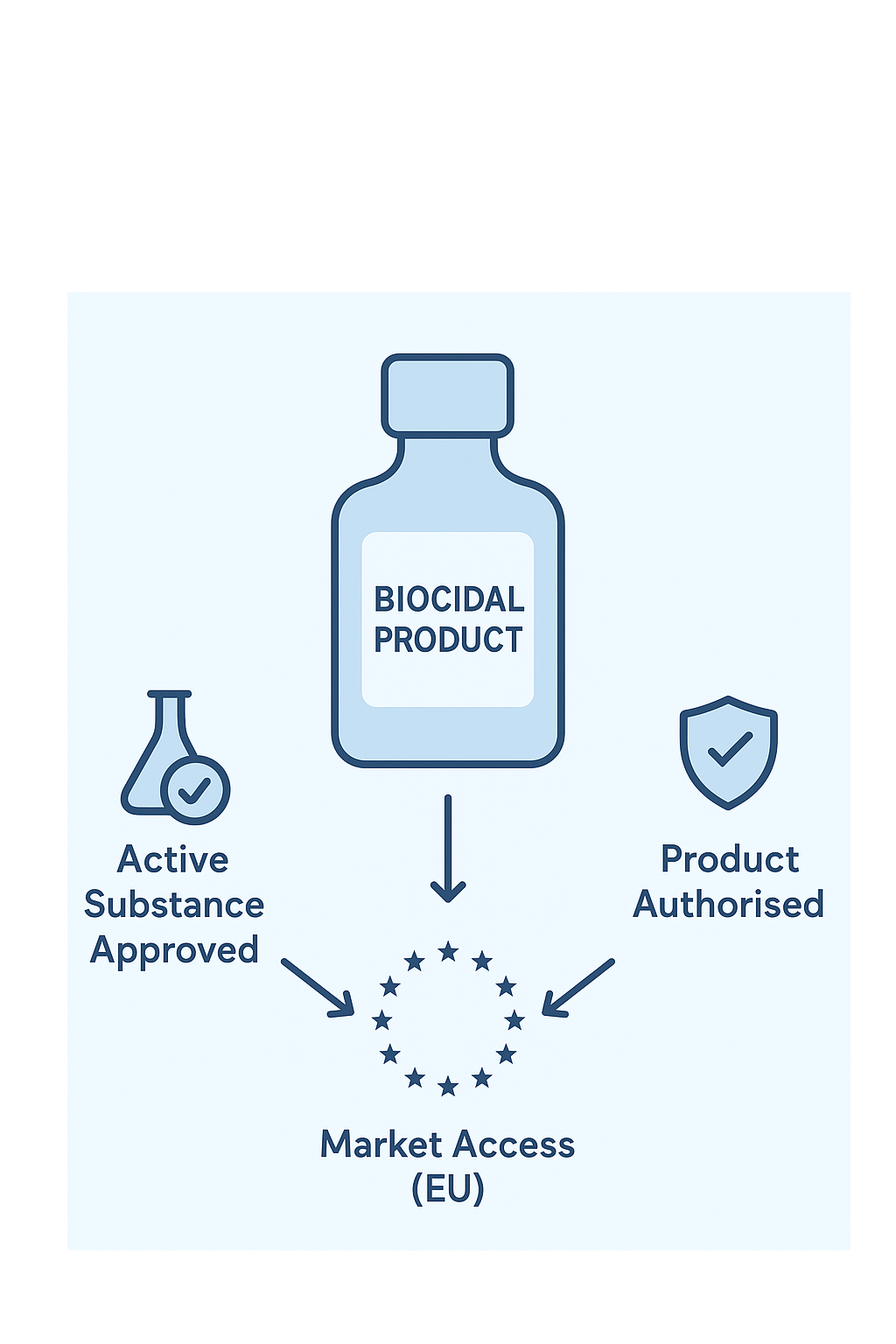
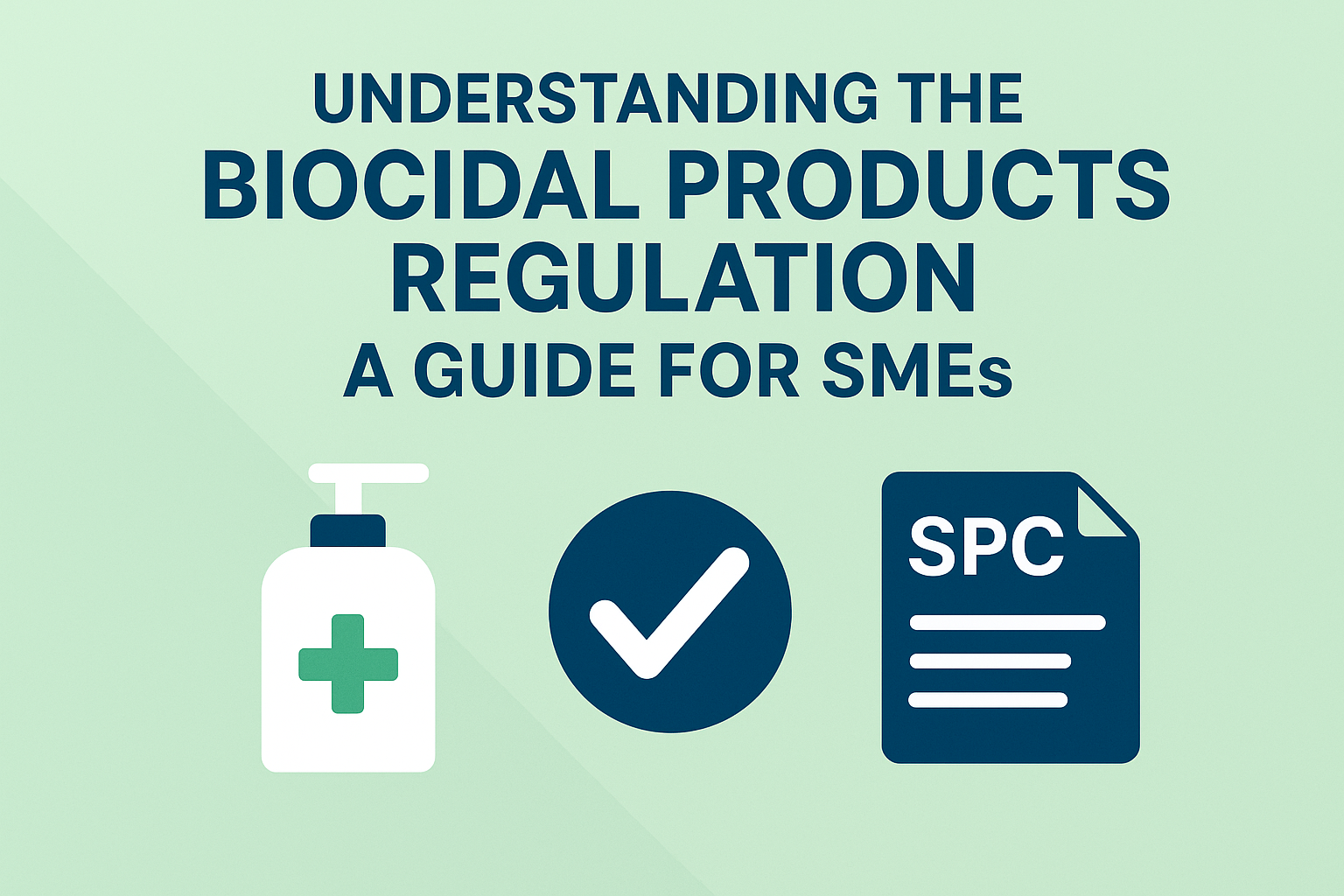
    Minimalist infographic illustrating the BPR process: active substance approval, product authorisation, and EU market access.
    The Biocidal Products Regulation (BPR) ensures safety and consistency from active substance approval to EU market placement.

    Why the BPR matters?

    The Biocidal Products Regulation (EU) No 528/2012, commonly known as BPR, governs the marketing, and use of biocidal products within the EU and EEA.

    Whether you manufacture disinfectants, preservatives, repellents or biocide-treated articles, BPR ensures that all those products are safe for humans, animals and the environment.

    BPR is an essential part of chemical safety. Do not wait until the last moment to prepare your product launch!

    For many companies, especially SMEs, navigating BPR can seem daunting. Many steps and authorizations are ahead of you and might seem confusing. This BPR Authorization guide can help you provide an early understanding of the process. This will save time, reduce costs, and avoid market delays.


    What products Fall under the BPR?

    The scope of the BPR are biocidal products. That is, substances or mixtures intended to control harmful organisms, such as bacteria, viruses, mould, or insects. Typically, they include disinfectants, cleaners, paints, and preservative fluids. However, BPR also applied to treated articles, like plastics, textiles, woods or other materials that have been treated or contain biocides.

    The EU has created 22 Product Types (PTs), grouped into four main categories:

    1. Disinfectants: PT 1-5
    2. Preservatives: PT 6-13
    3. Pest control: PT 14-19
    4. Other specific uses: PT 20-22

    To market your product, both the active substance and the final product must be authorized under BPR


    The BPR Authorization Pathways

    Obtaining a BPR authorization might seem confusing at a first glance. There are many different ways to achieve authorization. For this reason you should carefully plan your compliance strategy from the beginning!

    Indeed, there are several possible routes for placing a biocidal product on the market:

    1. National Authorization: Grants you access to a single EU country.
    2. Mutual Recognition: Is a special procedure to extend an existing national authorization to other EU countries.
    3. Union Authorization: This allows you to create a single authorization procedure valid across the EU for eligible product types.
    4. Simplified Authorization: for products with low-risk active substance devoted of nanomaterials.

    Each route requires specific data, IUCLID dossier formats, and comprises different fees. Choosing the right pathway is crucial for a right access to the market.


    Family Authorization: A cost-efficient option

    If you have several products with similar composition and uses, you should consider to apply for a Biocidal Product Family Authorization.

    This approach allows companies to register a group of products under one umbrella dossier. Thus, it significantly reduces costs and administrative effort. It is particularly advantageous for formulators or brands offering multiple products with the same active substance and similar uses. For example, multiple fragrance variations, different product size or other iterations of the same product.


    Common Challenges and Pitfalls for SMEs

    Many SMEs step into the BPR process with good intentions but completely underestimate the complexity of the regulation. In this BPR Authorization guide we will discuss the challenges that appear most often and how to avoid them:

    1. Misunderstanding the Active Substance Status

    One of the biggest mistakes is assuming the active substance is already approved.

    Many common substance are indeed still under review or not supported for every application. Thus, it is impossible to achieve product authorization for those chemicals.

    It is good practice to always check the active substance database first and verify the product type and authorized uses.

    2. Choosing the Wrong Authorization Route

    SMEs often apply for a national authorization because the fees are cheaper. However, in certain cases a Union Authorization or Mutual Recognition would save time and money in the long run.

    Indeed, poor authorization pathway selection can lead to moths of extra waiting, higher total fees payed, and unnecessary duplication of work.

    A quick strategic assessment can prevent all of those

    3. Underestimating Data Requirements

    Many SMEs don’t realize how heavy and expensive can BPR data sets be.

    Sometimes constituting a BPR dossier is far from evident. Even though possible in theory, citing literature data is not always accepted. Data waivers and exceptions require solid scientific justification. Finally, the conducted efficacy tests must meet strict EU protocols.

    A good early planning avoids last-minute surprises.

    4. Assuming a Family Authorization Will Fit Everything

    Product family authorization are a great tool to save cost, but they have strict boundaries. SMEs sometimes try to squeeze very different formulations into the same family, leading to rejections or delays.

    A proper gap analysis ensures coherent and defensible product families.

    5. Poorly Produced Labels or SDS and Claims Management

    Marketing claims of some products often fall into BPR territory without the company realizing it.

    Incorrect or non-compliant claims are one of the most common enforcement triggers at a national level.

    In this regard, the Summary of Product Characteristics (SPC) is an official, standardize document that describes exactly how a biocidal product must be used, labelled, classified, marketed and handled in the EU. This SPC is an identity card of your product under BPR. The marketing claims should be aligned with the SPC.

    In addition, non compliant CLP/GHS label information, missing or poorly written SDS, and incoherences between them and/or marketing claims or SPC information raise regulatory red flags. Check our articles on SDS authoring and CLP/GHS labelling to assure compliance!

    Always align marketing claims, SDS and label information.

    6. Not Planning for Ongoing Compliance

    BPR is not a one-time procedure. There are different aspects that a SME can ofter overlook.

    For example, fees must be payed annually. Also, the substance supplier list updates regularly and must be checked. Additionally, SPC information can change after regulatory reviews and should be kept updated. Finally, new data can be requested at any moment.

    Keep your information up-to-date.

    7. Going Alone Without Understanding the Workload

    As a SME, starting alone the BPR procedure to cut consulting costs might seem tempting. However, SME often realise too late that BPR authorization requires multiple expertises:

    • Toxicology.
    • Chemical exposure modeling.
    • Dossier preparation and management.
    • Planning and running efficacy tests for your product.

    Working with an specialist from the beginning usually reduces costs, delays and prevents mistakes that might require resubmission.


    To summarize…

    Bringing a biocidal product to the EU market is indeed complex. This BPR Authorization guide gives you the main focus points. From determining wether your product falls into BPR scope, to navigating active substance approvals, preparing the SPC, planning the dossier, budgeting timelines, and avoiding SME-typical pitfalls, BPR demands time, accuracy and a good strategy.

    The good news? With the right guidance, the path to BPR authorization becomes much clearer. We will help you understand your product from a regulatory point of view, plan early, and avoid common mistakes. Thus, you can save months of work and thousands of euros while ensuring your product reaches the market with fully compliance.

    Ready to make your BPR process easier? Contact us today and simplify your life!
  • REACH Registration explained: Everything a Small or Micro-Entreprise (SME) needs to know

    REACH Registration explained: Everything a Small or Micro-Entreprise (SME) needs to know

    In a nutshell…

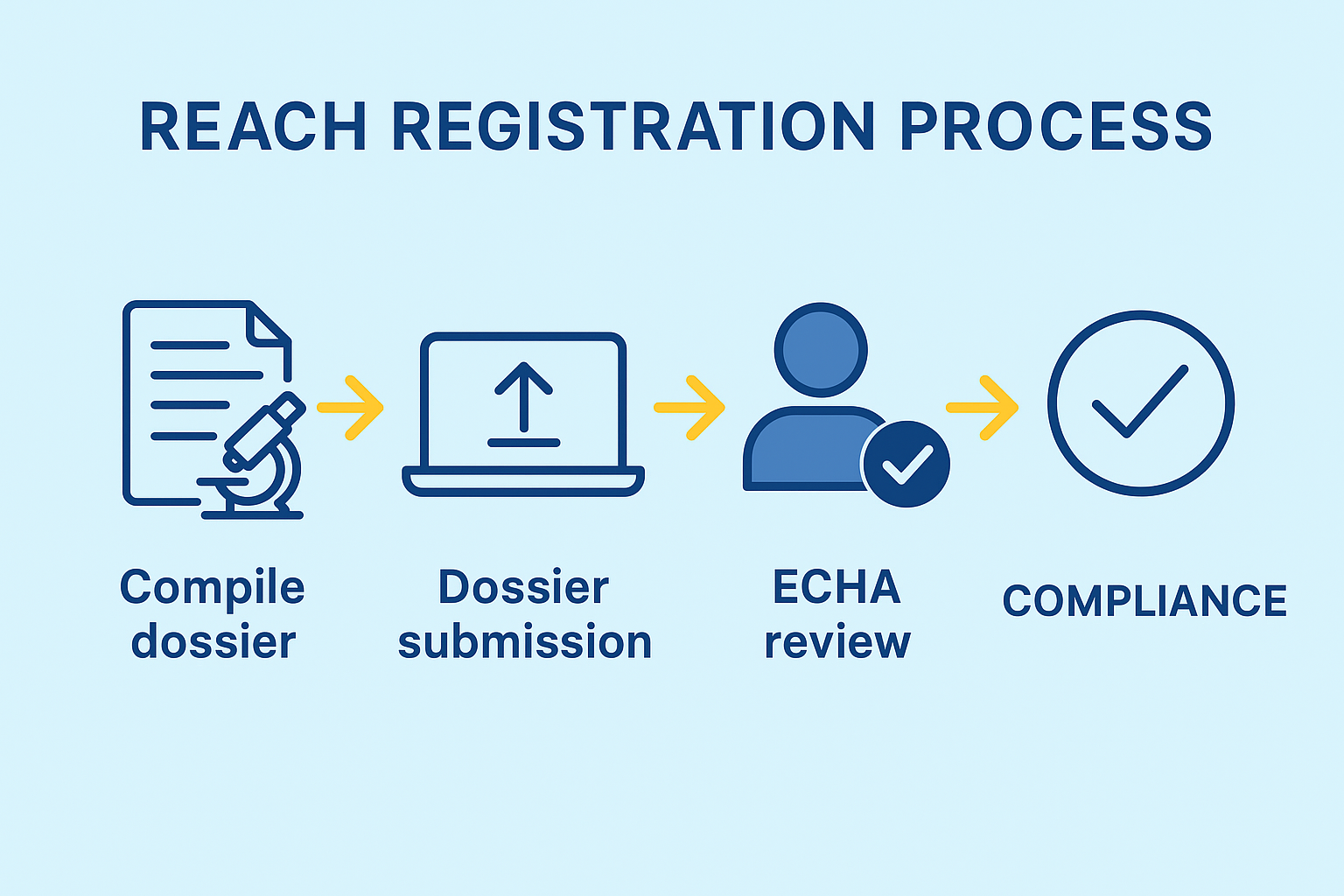
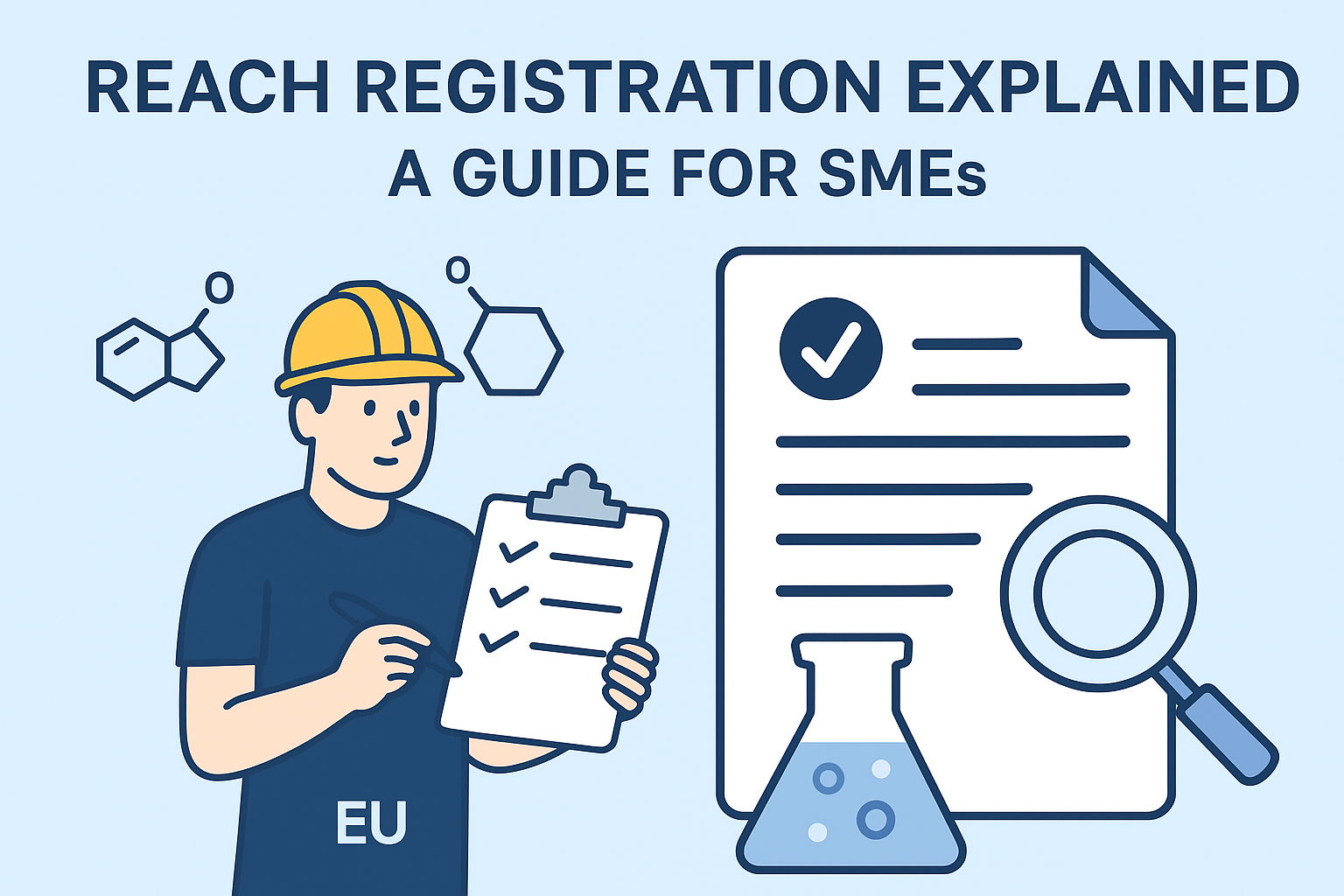
    Flat-style infographic illustrating the REACH registration process for SMEs, showing dossier preparation, ECHA submission, and compliance steps.
    The REACH registration process — from compiling your dossier to achieving full EU compliance.

    What is REACH registration?

    Every company must complete a REACH registration dossier if they want to place a chemical in the market, in a quantity higher than 1 tonne per year.

    The registration process is submitted via ECHA portal. The companies are responsable to gather data on the substances they manufacture or import to ensure their safe use.

    The principle: a substance, a Registration assures that all chemicals entering the EU market are safe .

    The REACH Registration process requires to prepare a technical dossier with the characteristics of the chemical product. The goal is to protect humans, animals and the environment.

    The content of the Registration dossier also depends on the quantities that you want to put in the market. For higher tonnages (usually > 100 Ton/year) it is mandatory to include a Chemical Safety Report (CSR) into the ECHA dossier.


    Who needs to register and when to do it?

    Registration is mandatory for all companies manufacturing or importing a chemical substance into the EU market in quantities over 1 tonne per year.

    For companies based outside EU, should either open a subsidiary office onto EU territory or appoint an Only Representative. In other words, a third EU company, to handle registration on their behalf.

    Generally, downstream users, formulators and other industrial users of chemical products do not need to register substances. However, they must be sure that:

    1. Their suppliers comply with EU regulations.
    2. The intended uses are covered in the supplier registrations.

    What information is required to register a chemical substance?

    The length and depth of the dossier often depends on the tonnage band applied. Typical cut-offs are 10, 100 or >1000 tonnes per year. In all the cases, There are 4 main sections:

    1. Identity of the substance. Including composition, purity, nature and amount of impurities.
    2. Physico-chemical, toxicological, and ecotoxicological data. Standardized tests and assays are privileged. The nature and number of tests depends on the chemical substance.
    3. Guidance on safe use, including proper CLP/GHS substance classification and labelling.
    4. Exposure scenarios for professionals and particulars depending on the intended uses indicated in the registration application.
    5. For substancies over 10 tonnes/year, a Chemical Safety Report (CSR) must be also prepared. To prepare this report, it is paramount to perform a Chemical Safety Assessment (CSA), taking into account the properties of the chemical substance. To help preparing and harmonizing CSAs, ECHA has created a free tool, CHESAR. This way, you can carry out CSA and generate a compliant CSR right away!

    Anyway, if you plan to commercialize an already registered chemical substance, you can always join an existing registration via a consortium or SIEFs. This will reduce your costs and testing needs and times considerably.


    How much does REACH registration cost?

    There is no short answer! The total cost of REACH registration can vary widely ranging from a few thousand to tens of thousand of euros. It depends on the substance, tonnage band, and data availability.

    ECHA Registration fees

    ECHA charges administrative fees based on the company size and tonnage band. There is a regressive fee scale:

    Company sizeFee price
    LargeFull price
    Medium60% reduction
    Small90% reduction
    Micro-entrepriseup to 95% reduction

    In addition, depending on the yearly amount that you want to commercialize will increase the price of the ECHA fee.

    You can to check the latest official fees and guidance in REACH Registration here!

    Data access and testing costs

    Besides ECHA fees, the larges expenses often come from data and testing requirements. It can include:

    • Data-sharing fees paid to existing consortia or registrants to access to testing data.
    • Laboratory studies for obtaining toxicological, ecotoxicological or physics-chemical when existing data is not available.
    • Regulatory consulting for dossier preparation support.

    In summary, all those costs typically range from 3 to 20 K€ per substance. Ultimately, the factors determining this costs include whether or not data is available for sharing, how many studies are required for a giving substance, and the substance complexity. For example, certain multicomponent substances, polymers, or nano materials often require extra tests.

    How to reduce costs?

    The cost of REACH registration can seem overwhelming for some enterprises, especially SMEs, and may even discourage you from marketing your product in the EU.

    However, REACH registration is a cornerstone of chemical safety and there are a number of strategies to help you reduce your REACH registration costs and streamline compliance.

    The first step is to check whether your substance is already registered. Joining an existing joint submission or consortium can bring testing cost down to zero, saving your company thousands of euros.

    Next, always verify if your company can benefit of the SME status, which makes you entitled for significant ECHA fee reduction (up to 90%).

    You can also minimize costs using existing literature data or applying testing waivers if they are scientifically justified.

    Finally, working with an experienced regulatory consultant can help you avoid errors that lead to costly re-submission or delays in bringing your product to the market.


    How long does registration take?

    The timeline for REACH registration process is quite variable, depending on the type of substance, the quality of available data, and whether you are joining an existing consortium or submitting a new dossier from scratch.

    In general, a full registration process can take anywhere from a few months to over a year. Complex substances requiring extensive testing often sit in the longer times.

    On the other hand, if the substance is already registered, joining a joint submission can considerably shorten the registration time. You will mainly need to complete your company-specific administrative steps and submit your member dossier through the online portal REACH-IT.

    New registrations typically require more time to gather data, perform laboratory tests if required, and prepare the Chemical Safety Report (CSR) and IUCLID dossier. Then, the ECHA review and completeness check adds a few additional weeks.

    For those reasons it is important to plan ahead. Especially if your product launch depends on the registration outcome.

    Working with a regulatory consultant can help you define a clear registration timeline, coordinate data sharing and avoid common pitfalls that cause unnecessary delays. With good preparation and expert guidance, most REACH registrations can often be completed under 6 months.


    Common mistakes SMEs make when registrating a new chemicals

    For small and medium-sized enterprises (SMEs), navigating REACH Registration can be challenging, particularly when resources and regulatory experience are limited. Unfortunately, under those circumstances a few common mistakes can make the process longer, more expensive, or even lead to rejected submissions.

    One frequent issue is starting the process too late. As we discussed REACH registration involves many steps from data gathering, running tests, to dossier preparation. All of those steps take time. Good and early planning avoids unnecessary delays in market launch.

    Another common mistake is not checking wether the substance is already registered. Joining an existing joint submission can save significant costs and time.

    SMEs also often underestimate the level of documentation required. A complete IUCLID dossier and a Chemical Safety Report (CSR) are essential for compliance. Missing data, unclear use descriptions, or poorly justified waivers can trigger ECHA completeness checks or rejections.

    A further pitfall is ignoring data-sharing agreements or not clarifying costs upfront with lead registrants. This can result in disputes or duplicated studies.

    Finally, many SMEs overlook the value of specialized REACH consultants, who can guide you through classification, exposure scenarios, and dossier submission. A small investment in expert advice can save thousands in rework and administrative fees.


    Simplify your life and reduce costs with us!

    Navigating REACH registration doesn’t have to be complicated or costly. Here, at Yourchemlab, we help you simplify the registration process, save money, and achieve quick compliance with ECHA’s regulations.

    Do not forget that you also need to keep up with CLP/GHS compliant labels for your products and you will need to prepare SDSs before launching your product. If you want to learn more you can visit our posts for CLP/GHS labels or SDS authoring.

    If you need help with your substance registration, our team can guide you every step of the process.

    Contact us today to discuss your REACH registration strategy and start your journey toward effortless compliance


    To summarize…

    REACH registration is an essential step to market chemical substances in the EU, both safely and legally. Here is a quick list of what you need to now:

    • REACH registration is a mandatory process to identify, assess, and document the safe use of chemicals.
    • You need to register a substance if you manufacture or import substances over 1 tonne per year.
    • There are possibilities to reduce registration costs. For example, joining existing consortiums, use existing data or data waivers where justified, or claim SME fee reductions.
    • The whole registration process takes anywhere from a few months to over a year, depending on data availability, testing needs, and dossier complexity.
    • Late preparation, missing data, unclear use descriptions, and not verifying existing registrations are common mistakes than can be easily avoided.

    A well-prepared label is not just regulatory “paperwork” it is the frontline of chemical risk management. Indeed, clear, compliant labels help workers handle chemicals safely and allow businesses to build trust across international markets.

    Simplify your life and reduce costs with us!

  • Understanding CLP/GHS Labelling: 7 Key Elements Every Business Must Get Right

    Understanding CLP/GHS Labelling: 7 Key Elements Every Business Must Get Right

    In a nutshell…

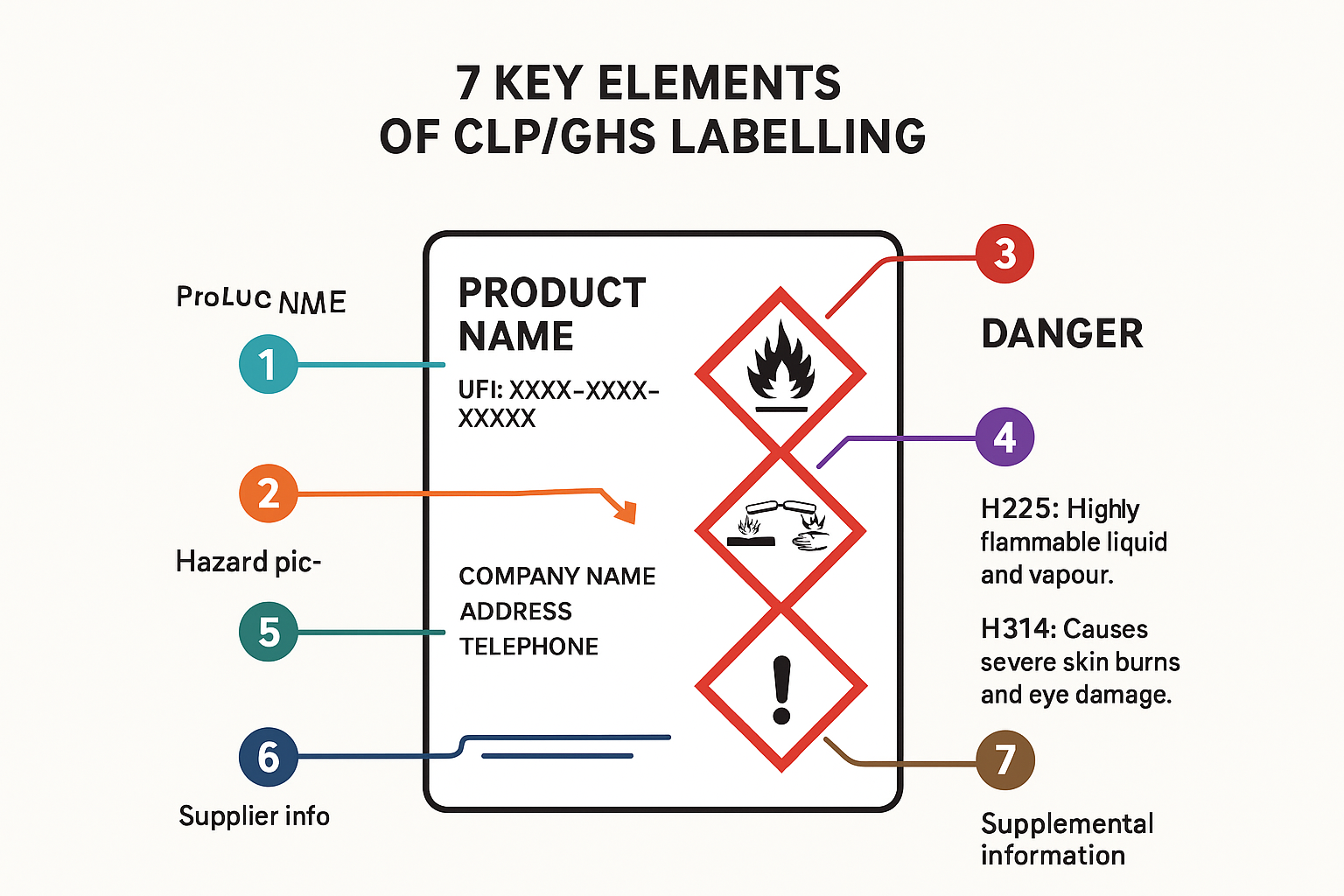
    Infographic showing the seven key elements of CLP/GHS labelling, including pictograms, signal words, hazard statements, precautionary statements, product identifier, and supplier information.

    Why the label of chemical products is important?

    Chemical products are everywhere: from industrial solvents and paints to everyday detergents, cosmetics and cleaners. Behind the label of each product lies a set of standardized rules designed to protect workers, consumers and the environment.

    Correct CLP/GHS labeling is more than just a regulatory requirement – it is the frontline of chemical risk communication!

    Indeed, the label of a product is the first thing users see before handling a product containing chemicals. A missing hazard pictogram, an outdated H-phrase, or even the wrong signal can create confusion, environmental problems, legal risks for your company or even safety incidents.

    What is CLP/GHS labelling?

    If you are placing multiple products or mixtures on the EU market or globally, understanding CLP/GHS labelling requirements is essential to maintain compliance, avoid costly recalls, and safeguard your company reputation.

    In the European Union, the Classification, Labelling and Packaging (CLP) Regulation is a set of standard rules, in line with the UN Globally Harmonized System (GHS) to correctly label chemical products.

    Doesn’t matter if you work under CLP or GHS frameworks, both standardized systems are crucial to ensure that chemical hazards are communicated in a clear and consistent way across countries and markets.

    In this post we will explore the 7 key elements of CLP/GHS labelling requirements, the most common mistakes companies make, and how you can ensure that your labels remain compliant and reliable.


    What are the 7 key elements of CLP/GHS labelling?

    To prepare a compliant chemical label under the CLP or GHS framework you need to include a set of mandatory elements. Each part serves a specific role in communicating hazards and ensuring the safety of products containing chemicals.

    Here’s what you need to get right:

    1. Product identifier

    Every label must clearly identify the substance or mixture. This usually requires the following information:

    • Trade name or commercial name of the product.
    • Substance name (if it is a pure substance) or list of hazardous components (for mixtures).
    • Unique Formula Identifier (UFI): is a 16-character code that links the label to the exact mixture composition. In fact, from January 2025, a UFI number is mandatory for mixtures placed in the EU market that are subject to Poison Centre Notification (PCN)

    All those elements ensure that the label matches the SDS and allows to identify the hazards.


    2. GHS Pictograms

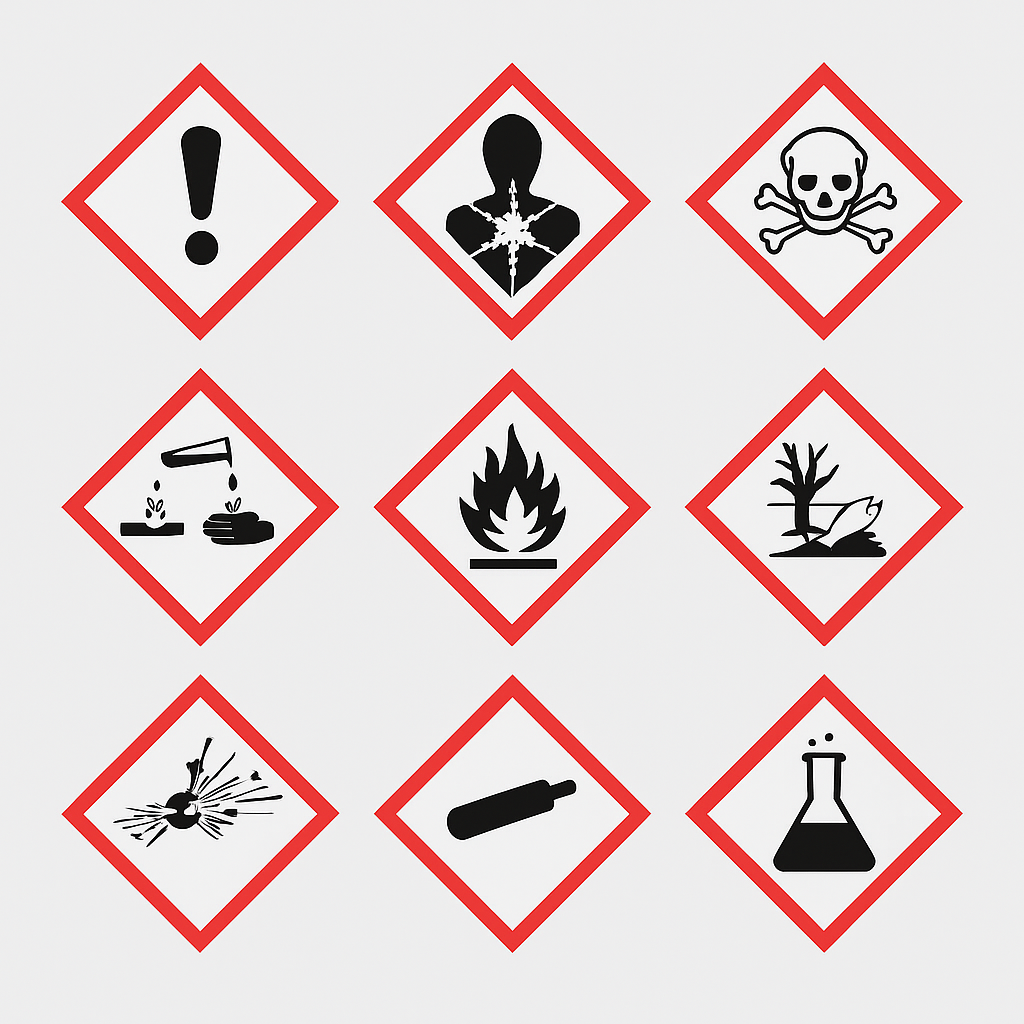
    The red diamond images, aka GHS standard pictograms, are designed to visually represent chemical hazards.Those pictograms can be found on official sources like EU ECHA or OSHA for the EEUU.

    The GHS standard pictograms are a key part of the label as allow users to instantly and visually recognize the chemical hazards.

    Depending on classification one or more pictograms should be necessary.


    3. Signal words

    Two words are used as signal words:

    • Danger: for severe hazard.
    • Warning: for less severe hazards.

    And you must choose only one!


    4. Hazard Statements (H-phrases)

    The H-phrases are a collection of standardized phrases that provide information about the possible hazards. They are available at GHS or CLP sources in EU official languages.

    Each Hazard Statement is linked to a code to make it easily identifiable and translatable to other languages. Nevertheless, the code is not required to be shown on the label.

    Anyway, even if you don’t like the phrasing, you are compeled to use H-statements exactly as they appear in the CLP/GHS framework.

    Finally, aiming for consistency in chemical hazard communication is the best strategy to implement in your company. You can also check our guide about the 5 Common Mistakes in SDS Authoring (and How to Avoid it).

    5. Precautionary Statements (P-phrases)

    As its name implies, precautionary statements (P-phrases) are meant to communicate to users the basic precautions that should be taken when handling, storing or disposing hazardous chemicals. They also contain information on how to respond to emergencies.

    The advice of an expert is crucial to wisely choose the P-Statements that will appear on yourlabel. Typically, only 3-6 P-statements are selected to avoid overcrowding the label.

    Similarly to H-phrases, P-statements are also associated with codes to facilitate discussions; although these codes are typically not required to be shown on the label. They are also available on official GHS and CLP sources.

    6. Supplier information

    Labels must include the name, full address, and telephone number of the supplier (manufacturer, formulator, importer, or distributor).

    This information ensures traceability and lets authorities and users know who is responsible for the product. Indeed, missing or outdated supplier details is a red flag in inspections.

    7. Supplemental information

    Sometimes, you need to add additional information to your label.

    One example are the EUH phrases, specific to the CLP framework and EU markets. Their purpose is to provide information about chemical hazards beyond what it is possible with only H- and P-phrases.

    Also, some products require specific product-use scenarios (detergents, biocides, cosmetics, etc.)

    Bear in mind that, although supplemental, those additional phrases and information are a mandatory CLP/GHS labelling requirements and not optional.


    What are the most common pitfalls when producing labels ?

    Even companies or individuals with the best intentions may slip-up when applying the CLP/GHS framework.

    Avoiding the following pitfalls will ensure compliance and will build safety and user trust on your brand:

    Wrong or Missing Pictograms

    Using the incorrect hazard pictogram, or omitting one entirely, can lead to serious compliance issues. The resulting label might be misleading and unsafe and might put your business at risk!

    Mixing Old (DSD/DPP) and New Labels (GHS/CLP)

    Some products still carry outdated orange square symbols from legacy Dangerous Substances Directive (DSD) or Dangerous Preparations Directive (DPD). Please, keep in mind that those pictograms are no longer valid should not appear on labels.

    Language Issues

    In multilingual markets like EU, CLP/GHS label requirements impose to be written in the official language(s) of each country were the product is sold.

    Do not take the short-cut of producing English only labels! They are non-compliant in many Member States.

    Overcrowded or Poorly Designed Labels

    The spirit of the law is to provide standardized, clear labels to facilitate chemical hazard communication.

    Although it might be tempting, you should avoid adding too much text, placing elements in the wrong order, or using tiny font sizes. All those mistakes makes labels hard to read and increases the risk of errors manipulating hazardous chemicals.


    How can ensure that my labels are and stay compliant?

    CLP/GHS labelling might seem complex at the first approach, but with the right processes your company can stay on the safe side. Here you will find some good practices:

    Use Updated Classification Tools

    You should always use updated databases or software to accurately classify your products. Regulations evolve regularly, and hazard classes or cut-off values can change.

    Review Official Guidance Regularly

    ECHA and OSHA, for the EU and US markets respectively, publish frequent updates, guidance and Q&A documents. Keeping up to date helps you to stay compliant.

    Hire an Expert to produce or Verify Your Labels

    A regulatory consultant or a compliance officer can check your labels to printing them. This small investment can prevent costly recalls or fines down the road.

    Standardize Your Label Workflow

    Define who is responsible for SDS authoring, product classification, and label creation. A clear internal workflow will reduce errors and help detect them in a early stage.

    Test the Label Readability

    Always make sure that your hazard and precautionary statements are legible and understandable to not only regulatory professionals but also non-experts.

    Or you can let us guide you thorough the whole process to ensure full compliance in all your projects!


    To summarize…

    At the end of the day, labels are designed to be readable in a glance. Thus, all the GHS/CLP labelling elements must appear on the label in a way that is:

    • Clear: legible font size.
    • Durable: resistant to transport and storage conditions.
    • Understandable: no contradictions or overlaps.

    A well-prepared label is not just regulatory “paperwork” it is the frontline of chemical risk management. Indeed, clear, compliant labels help workers handle chemicals safely and allow businesses to build trust across international markets.

    Contact us today for a label audit or tailored regulatory service

  • 5 Common Mistakes in SDS Authoring (and How to Avoid Them)

    5 Common Mistakes in SDS Authoring (and How to Avoid Them)

    In a nutshell…

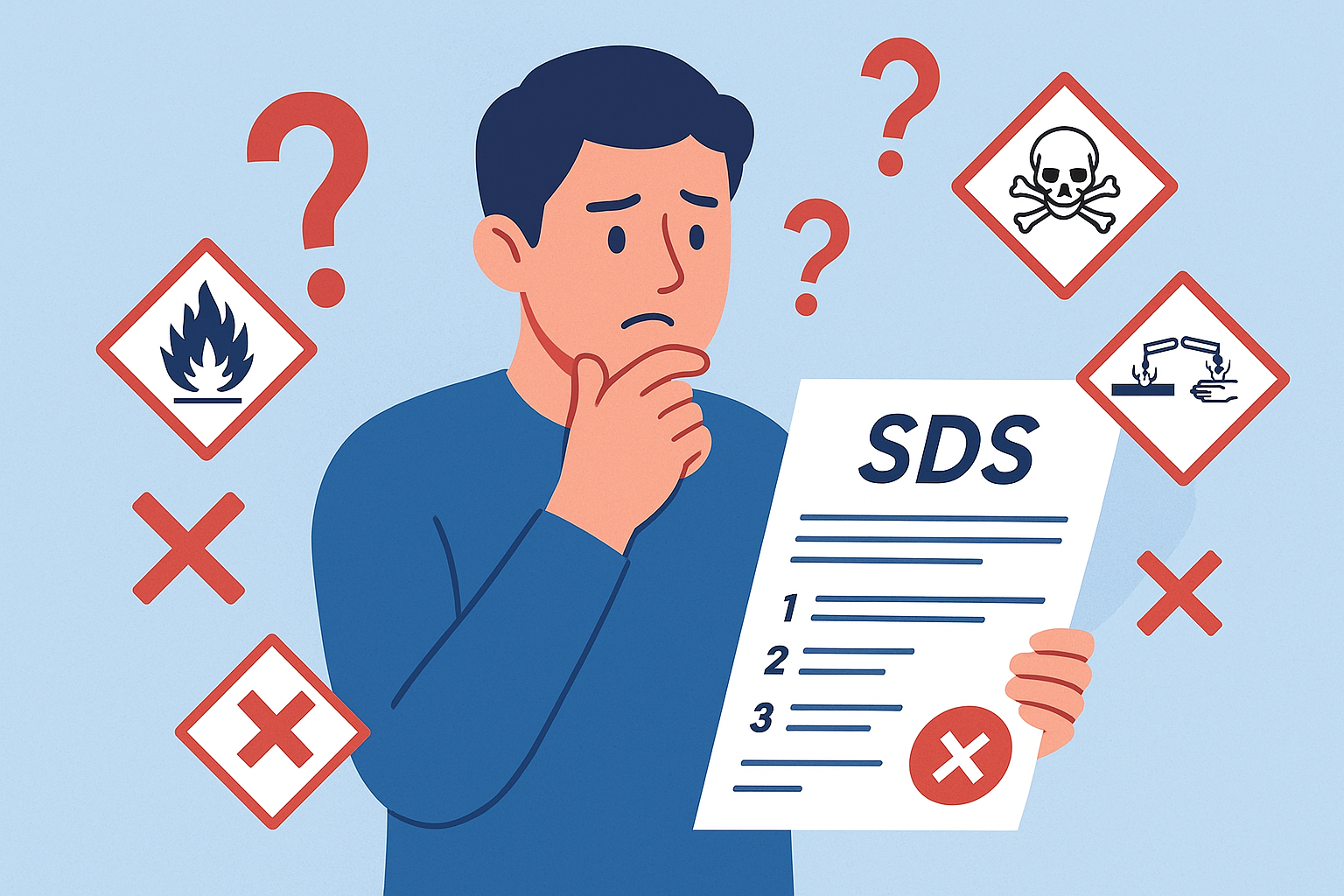
    Illustration of a confused professional holding a Safety Data Sheet (SDS), surrounded by hazard pictograms, question marks, and red error symbols, representing common mistakes in SDS authoring.

    1. Incorrect or incomplete substance classification

    This error is more present on SDSs of multicomponent mixtures ( fragrances, detergents, cosmetics, etc.). The culprits can be varied, but the most frequent arise from misinterpretations of CLP/GHS classification criteria, or using an outdated reference.

    Why this matters?

    An incorrect classification leads to wrong hazard statements and labelling, putting your company at legal and regulatory risk

    How to avoid this?

    Always use the latest harmonized classifications from official sources (Annex VI of CLP for EU or GHS relevant sources for other jurisdictions).

    Pay special attention to document the methodology behind your classification decisions and track the regulatory updates.


    2. Copy-paste SDSs

    Re-using documents found on the internet, or supplier SDSs without adapting the content to current regulatory framework.

    Why this matters?

    Regulations are not universal. A random SDS found on the Internet might or might not be adapted to the adequate regulatory framework for your product. Besides, regulations change frequently (eg. REACH updates, CLP ATPs), so outdated content can make you copy-pasted SDS non-compliant

    How to avoid this?

    Do not copy SDS without checking the correct regulatory framework.

    Double-check if the content is updated by consulting last releases of the official regulatory databases. In addition, ensure your SDS templates or authoring software is updated.


    3. Missing or poorly produced Exposure Scenarios

    Failing to include required exposure scenarios under REACH, or providing generic, vague descriptions not adapted to your jurisdiction constitutes a regulatory risk.

    Why this matters?

    The authorities expect exposure scenarios to be substance-specific and linked to the Chemical Safety Report (CSR). Missing details can invalidate your SDS.

    How to avoid this?

    Ensure that your SDS include exposure scenarios and that they are tailored to the actual uses and jurisdictions. Format them according to ECHA templates.


    4. Not adapting to local language and format requirements

    Sending the same SDS to multiple countries without proper translation or adaptation of the content to local regulations.

    Why this matters?

    An SDS must be provided in the official language(s) of the country where the product is placed. Non-compliant SDSs, such as English-redacted SDS for all EU market, can block sales.

    How to avoid this?

    Use professional translation services experienced in chemical terminology.


    5. Inaccurate or incomplete data on section 9-16

    Providing vague or placeholder data (eg. “not applicable”) in critical sections such as physico-chemical properties, stability or disposal considerations.

    Why this matters?

    These sections are essential for safely handling chemicals and emergency response . Missing or omitted data can expose your company to legal liabilities.

    How to avoid it?

    Gather accurate data from the literature when available or run reliable experiments to acquire it.

    Follow ECHA guidance on the level of detail required in each section considering the potential risks of your products.


    To summarize…

    SDS authoring is not just a paperwork exercise, it’s a crucial compliance task that protects your company, your workers and your customers.

    By avoiding those 5 mistakes in SDS authoring, you can have a great head start to assure that your SDSs meet the latest CLP, REACH, and GHS requirements.

    Do you need help? Check our SDS-ready services including a express option for a fully compliant SDS in only 48h!